Why the Best App You'll Download This Year Probably Costs Five Bucks
Photo: Mikarbo02, CC BY-SA 4.0, via Wikimedia Commons
Free is a hard price to argue with. It's right there in the name. You get the app, you pay nothing, and you move on with your day. Except, of course, you don't really pay nothing. You pay with your attention, your data, your tolerance for upsell prompts, and eventually your time — spent either dealing with feature limitations or being nudged toward a subscription tier that costs more per year than the paid app you avoided downloading in the first place.
The math on free apps has always been a little fuzzy. Right now, though, a growing number of developers and users are doing the math differently, and what they're finding is that a flat $5 purchase — or even $10 — often delivers more actual value than a freemium model with a $7.99 monthly ceiling.
The Freemium Trap
Freemium became the dominant app monetization strategy for a reason. It lowered the barrier to download dramatically. Users who might hesitate at a $4.99 price tag would install something for free without a second thought, giving developers a massive top-of-funnel advantage.
The problem is that the model creates a fundamental conflict of interest. A free app's job isn't just to be useful — it's to convert you. Every design decision, every feature placement, every notification is at least partially in service of getting you to upgrade. That pressure shapes the product in ways that aren't always in your interest as a user.
You've felt this. The note-taking app that lets you create notes for free but charges you to search them. The habit tracker that locks your own historical data behind a paywall. The weather app that's free but shows you an ad every time you check whether to bring an umbrella. These aren't bugs in the freemium model. They're features of it.
What Paid Apps Do Differently
When a developer charges upfront — even a modest amount — the relationship changes. They've already made money from you. Their incentive now is to keep you happy enough that you recommend the app to someone else, leave a good review, or buy their next product. That's a much healthier dynamic, and it tends to produce better software.
Paid apps also tend to attract a different kind of user. Someone who paid $6 for an app has already decided they want it. They're more likely to engage deeply, provide useful feedback, and stick around. Developers who serve that audience build for people who actually use the product, not for conversion metrics.
The results show up in the apps themselves. Take Pockity, a markdown notes app, or Tot, a simple text scratchpad — both paid, both beloved by their users in a way that free alternatives rarely inspire. Or look at something like Darkroom for photo editing, which operates on a paid model and consistently outranks free competitors in user satisfaction scores despite having a fraction of their marketing budgets.
Running the Real Numbers
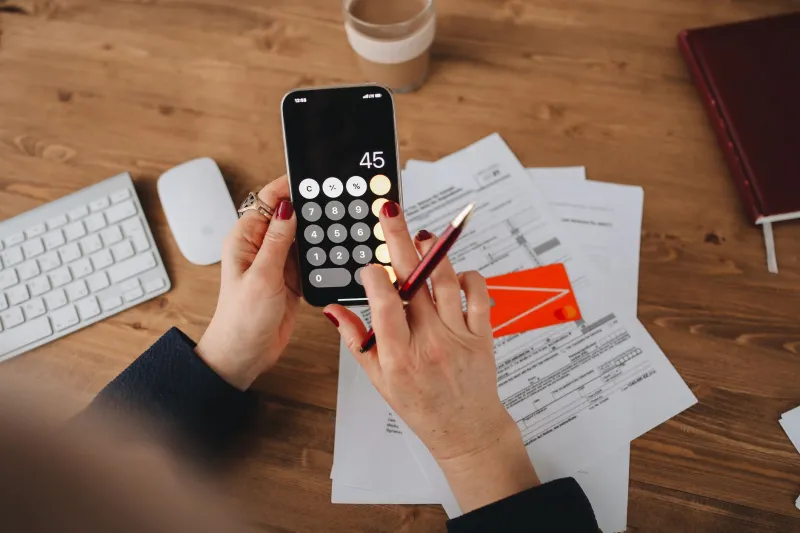
Let's get concrete. Say you download a free task management app and eventually convert to its premium tier at $7.99 a month. Over two years, that's $191.76. A comparable paid app at $9.99 one-time costs $9.99 over two years — or any number of years after that.
Now factor in the time you spent navigating the freemium limitations before upgrading, the cognitive overhead of being marketed to constantly, and the possibility that the free app pivots its pricing model (it happens more than you'd think), and the $10 app starts looking less like a splurge and more like a bargain.
This isn't a universal rule. Some subscription apps genuinely justify their pricing through ongoing development, sync infrastructure, and customer support. But a lot of them don't, and the category has become crowded enough that it's worth scrutinizing every monthly charge before accepting it as the cost of doing business.
Categories Where Paid Wins Consistently
Not every category is equal here. Based on our testing and user reports, paid apps tend to outperform most clearly in a few specific areas:
Writing and text tools. iA Writer, Ulysses (okay, that one's a subscription, but a defensible one), and similar focused writing apps consistently deliver cleaner, more reliable experiences than free alternatives loaded with ads or stripped-down functionality.
Utility apps. Password managers, file browsers, clipboard tools, and similar utilities benefit enormously from the paid model. These are apps you interact with constantly and where reliability is non-negotiable. A free password manager with shady data practices is not a deal.
Creative tools. Procreate remains one of the App Store's greatest success stories — $12.99, no subscription, no ads, and widely regarded as the best illustration app on any platform. It's a masterclass in what a paid creative tool can be.
Health and fitness trackers. Apps that manage genuinely sensitive data — sleep, cycles, mental health — are categories where paying for privacy is arguably worth it on principle alone.
The Discovery Problem
Here's the honest challenge: paid apps are harder to discover. The App Store's algorithm naturally surfaces apps with more downloads, and free apps will always win that metric. Paid apps don't get the word-of-mouth boost that comes from frictionless installs. They live or die on reviews, press coverage, and the kind of enthusiast communities that form around tools people actually love.
That's where a site like this one actually has a job to do. Surfacing quality paid apps that might otherwise get buried under a pile of free alternatives with better SEO is genuinely useful — and it's something we plan to keep doing.
The Bottom Line
Free isn't going away, and it shouldn't. Plenty of free apps are excellent and operate with integrity. But the reflexive preference for free over paid is worth examining, especially when the free version is actively designed to frustrate you into paying more later anyway.
Next time you're about to skip a $4.99 app in favor of the free one below it in the search results, take thirty seconds to read what the paid version actually offers. You might find that five bucks is the best money you spend on your phone this year.